





What is a ventilation box ?
A ventilation box is an enclosure designed to house the fans responsible for moving air through the ventilation system. These fans can be axial or centrifugal, depending on airflow and pressure requirements. Some ventilation boxes incorporate filters to purify the air by removing fine particles, allergens, pollutants and other contaminants. They are generally designed with soundproofing materials to reduce the noise generated by fans in operation. This minimizes noise pollution in living and working spaces.
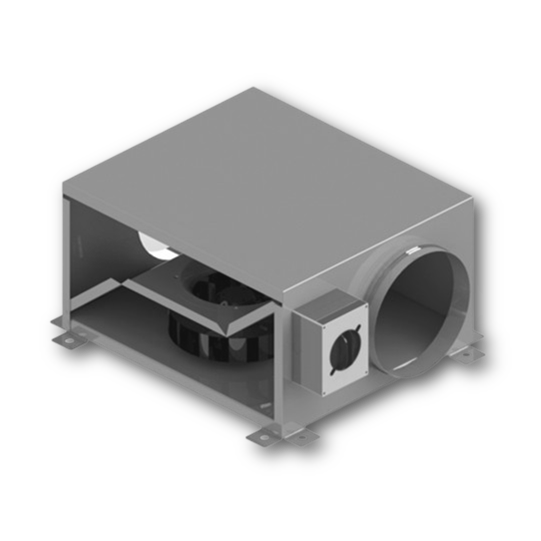
Model: direct drive
3 sizes (in mm)
150, 200 and 250
Air flow rate from 300 to 1400 m3/h
Static pressure up to 290 Pa
Single-phase motors
Number of poles : 2
- Download data sheet En
- Download data sheet En
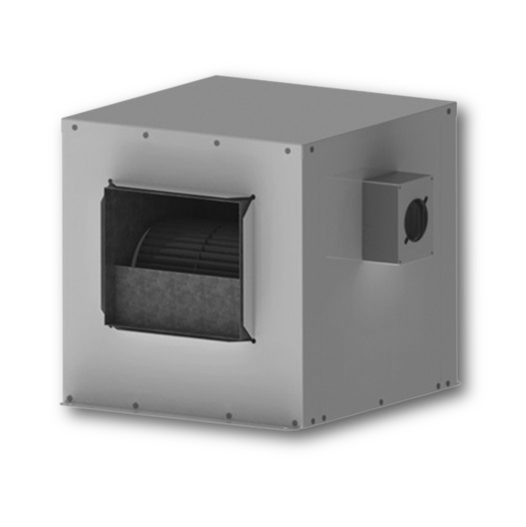
Model: direct drive
5 sizes (in inches)
7/7, 9/9, 10/10, 12/12 and 15/15
Air flow from 500 to 10000 m3/h
Total pressure up to 500 Pa
Number of poles : 4 and 6
Three-phase motors
Number of poles : 6
- Download data sheet En
- Download data sheet En
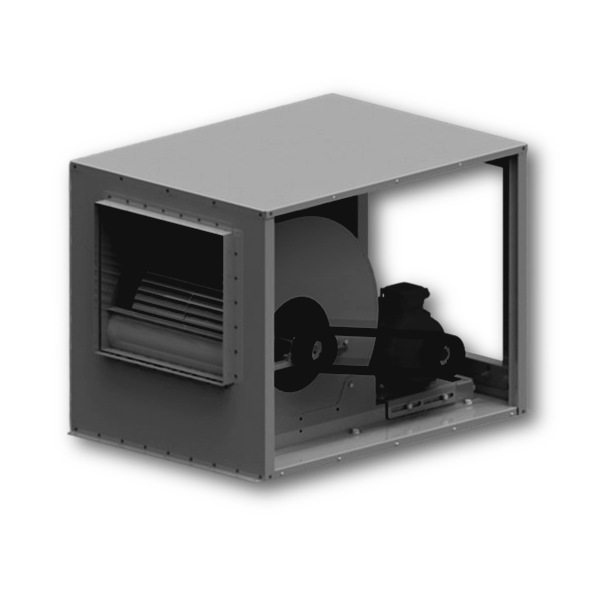
Model: belt-driven
5 sizes (in inches)
12/12, 15/15, 18/18, 20/20 and 22/22
Air flow from 1000 to 30000 m3/h
Total pressure up to 1500 Pa
Three-phase motors
Number of poles : 6
- Download data sheet En
- Download data sheet En
Applications
Ventilation boxes are widely used :
- In heating, ventilation and air-conditioning (HVAC) systems in residential and commercial buildings.
- In workshops, warehouses and production plants, as well as in cleanrooms and controlled-atmosphere environments, such as pharmaceutical laboratories, operating theatres and cleanrooms in the electronics industry. They help maintain strict hygiene and cleanliness conditions by controlling air quality.
- In road and rail tunnels, as well as underground parking lots, to ensure effective, safe ventilation in the event of fire or pollution by vehicle exhaust fumes.
- In special applications such as data centers, water and waste treatment plants, commercial kitchens, agricultural greenhouses, sports halls and swimming pools.