Our burners are designed to suit a wide range of industrial and commercial applications, offering reliability, energy efficiency and optimum performance.
Our burners are designed to suit a wide range of industrial and commercial applications, offering reliability, energy efficiency and optimum performance.
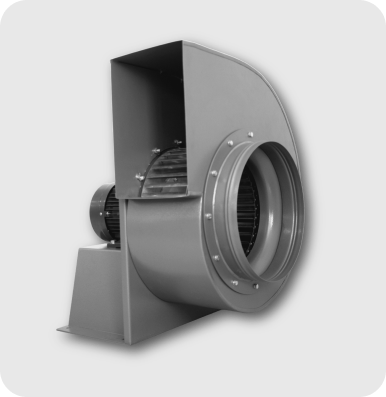
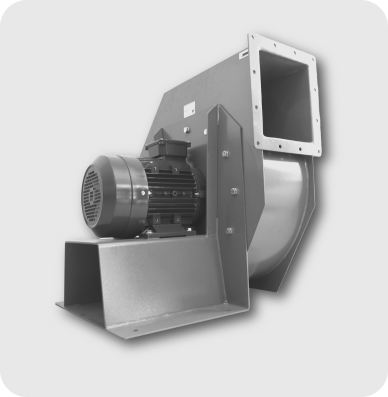
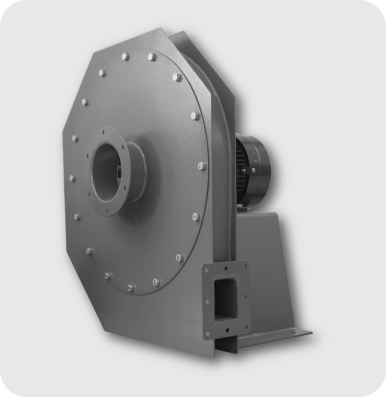
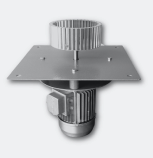
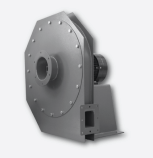
The centrifugal fan is an industrial fan perfectly suited to high pressures. It is based on scroll and impeller technology, which enables it to obtain the desired pressure to counteract pressure losses in an aeraulic network. It uses centrifugal force generated by a rotating disc. Air is drawn in parallel to the axis of rotation of an impeller rotating in a scroll and propelled by centrifugal force perpendicular to this same axis. Unlike an axial-flow fan, it can achieve medium flow rates at high pressures.
We offer various types of centrifugal fans with different impeller shapes, specially designed to withstand different pressures, to meet specific power and speed requirements.
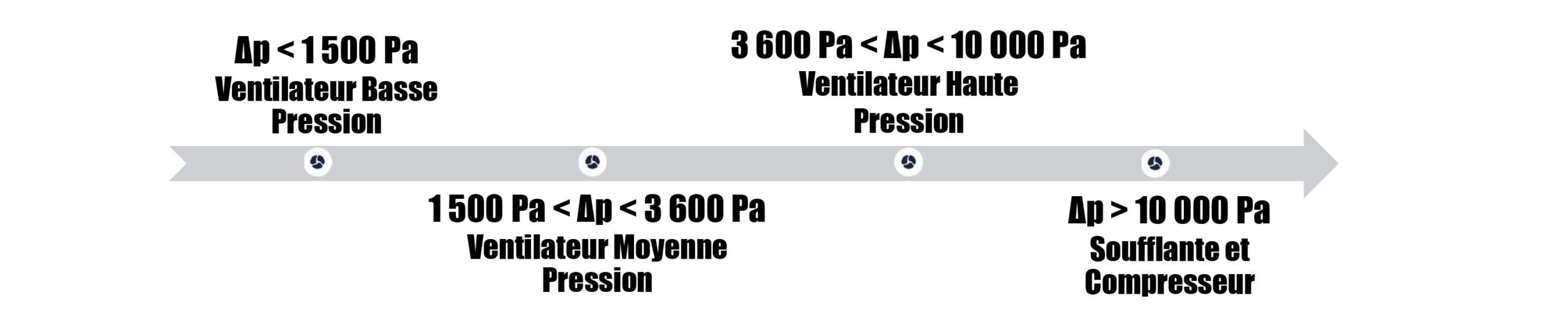
Our low, medium and high pressure fans are designed to meet your every need : optimum flow, efficiency and robustness. Since 1979, we've been guaranteeing quality for your most demanding applications. Why look elsewhere for excellence?
Applications
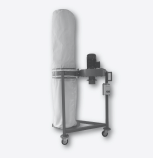
The centrifugal fan is one of the most efficient and versatile types of air-handling equipment. They are used in ventilation, air conditioning and heating. They can also be used in industrial applications for pneumatic conveying, dust removal, smoke extraction, drying and pressurization. It is highly appreciatedinthe chemical,water purification, steeland metallurgyindustries, and in anyindustrial applicationrequiring the use of filters.
Fan impellers consist of a steel disk to which the blades are attached. These blades can be joined at the other end by a ring, which stiffens and braces them. There are three main types of turbine:
Forward impellers
have forward-inclined blades. The air is attacked from the underside of the blade. Their spoon-shaped configuration makes them unsuitable for dust-laden or even damp air. They are ideally suited to conveying clean, dry air, and can achieve efficiencies of up to 88%.
Backward impellers
have backward-inclined blades. They are also known as semi-dust extractors. They are suitable for conveying dust-laden air up to 5 g/m3 and can achieve efficiencies of up to 83%.
Radial impellers
have straight blades. They are also known as self-cleaning. Open, they are suitable for conveying waste. Equipped with a crown, they are used to transportchips and non-fibrous particles. They can achieve an output of 73%.
A radial bladed impeller with a crown is suitable for wood dust removal installations with concentrations of 15 to 50 g/m3 of air. On the other hand, the presence of fibrous elements due to edging or sawing operations calls for the use of a turbine without a crown, to avoid any sticking points for these fibrous elements, which would cause the turbine to become irremediably unbalanced. The same applies to pneumatic conveying of highly concentrated materials.
The double-width impellers
are made up of two adjacent single-inlet impellers drawing air from either side of the impeller.
The shapes and proportions of the impellers and blades define the aeraulic characteristics of a centrifugal fan. High-flow, low-pressure impellers are wide, and their diameter is very close to that of their inlet. High-pressure, low-flow impellers, on the other hand, are narrow and fitted witha small-diameter intake port. Between these two limits lies a whole range of turbines, whose proportions and shapes correspond to well-defined flow-pressure ratios.
How to choose your fan?
It is essential to identify the specific use of the fan, taking into account the environmental conditions in which the fan will be installed, such as temperature, humidity, presence of dust or corrosive gases.
Calculate your ventilation needs :
It is not possible to size your fan until the following four parameters are known:
Air flow required for the application
Total pressure gain generated by the fan
Intake air temperature
Fan connection
While air flow, temperature and connection are parameters that can easily be determined according to the application, total pressure gain requires specific calculations depending on the connection mode. It's vital to know your network in order to determine your operating point.
The total pressure of a fan is measured in pascals and corresponds to the sum of two different pressures :
The dynamic pressure (Pd) corresponds to the overpressure required to generate the air velocity in the aeraulic circuit.
Static pressure (Ps) is the pressure exerted by air on wall elements perpendicular to the direction of flow. It therefore corresponds to the sum of pressure losses caused by the pipe and its equipment. Pressure loss is a loss of energy that must be compensated for in order to allow the fluid to move. It is commonly expressed as a pressure difference (∆P).
To reduce pressure loss, it is advisable to :
Use large-diameter, circular-section conduits,
Circulate air at low speed (except when transporting dust),
Go as straight as possible and avoid right-angled bends.
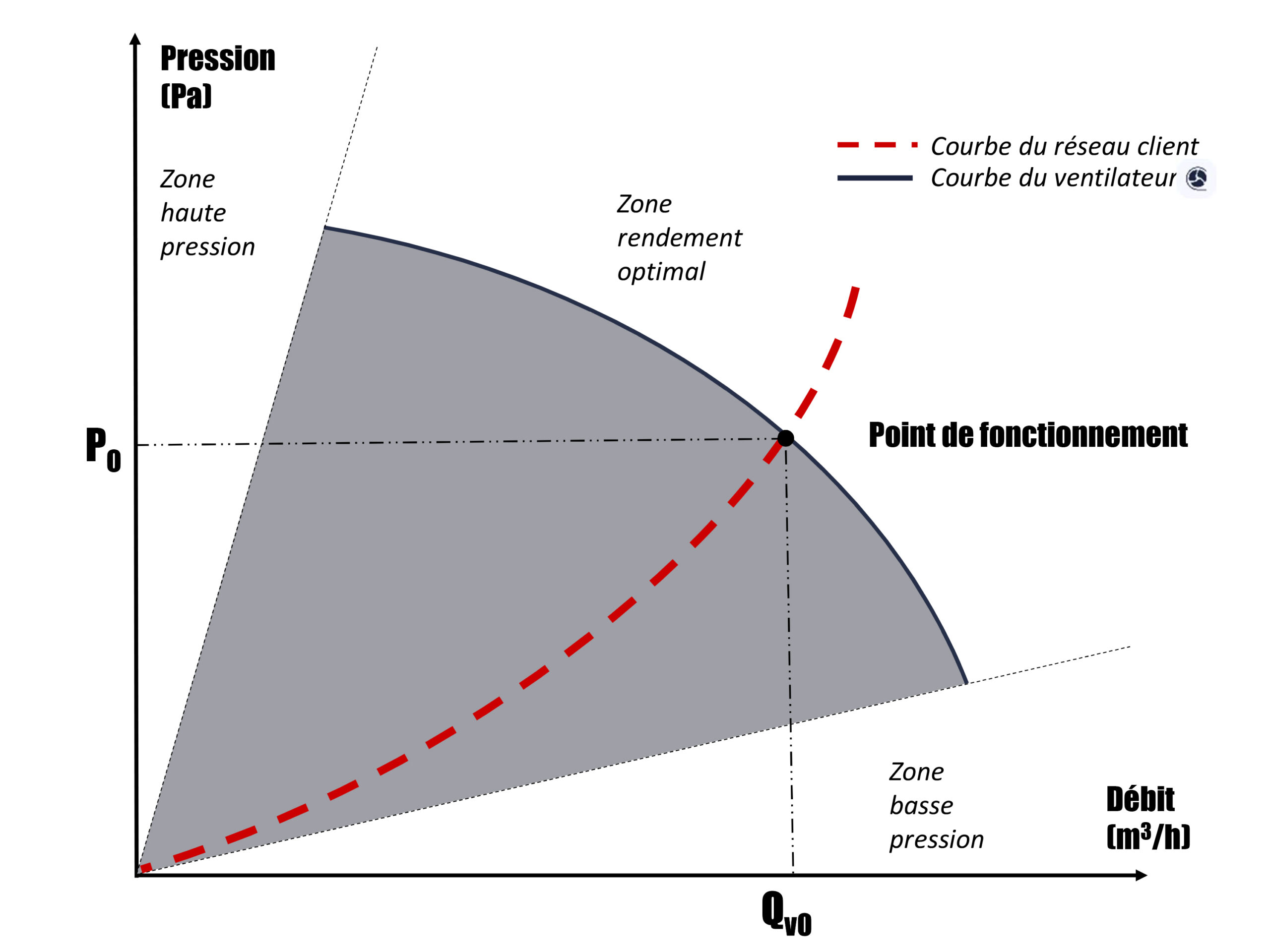
Fan selection curves show static pressure or total pressure as a function of flow rate.
What is the operating point
The combination of required flow rate and desired static pressure gives you your operating point. It corresponds to the intersection of the two flow/pressure curves :
Fan selection curve
Customer network curve
Tunisian leader
Take action, order your fan today
Take control of your comfort, order your fan today and breathe fresh air at home.